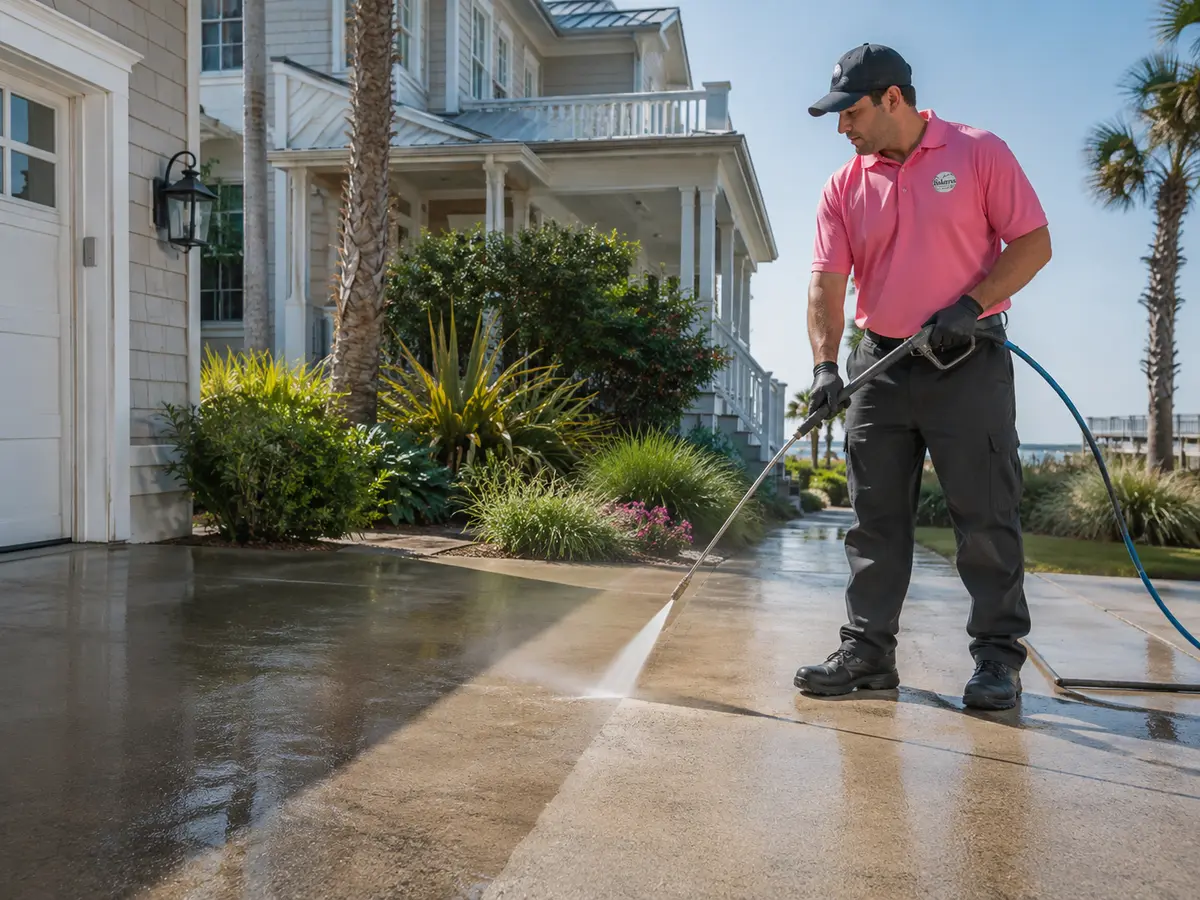
Exterior surfaces and pools in the Grand Strand face strong sun, rainfall, humidity, salt exposure and heavy seasonal use. This guide explains the practical factors property owners, vacation-rental operators, HOA boards and property managers should consider before choosing a service approach.
Frequent moisture can affect coatings, wood, masonry, metal hardware and organic growth on exterior surfaces.
Properties closer to the coast may need more frequent inspection and cleaning of exposed finishes, glass and metal components.
Why This Matters in Myrtle Beach & Horry County
Property maintenance on the Grand Strand has a different operating environment from many inland markets. High humidity, strong summer heat, heavy rain events, coastal exposure, seasonal occupancy and storm preparation all affect how quickly a property can change between visits.
For owners who live out of state or manage multiple properties, the service itself is only one part of the job. Clear scheduling, field notes, photographs, issue escalation and a dependable point of contact can be just as important as the physical work.
How to Compare the Options
Choose based on the surface, use case, expected maintenance cycle and risk of damage—not simply the lowest initial cost. A method that is appropriate for concrete may be too aggressive for siding, roofing, painted finishes or other sensitive materials.
When comparing proposals, look for preparation steps, materials or chemicals, protection of adjacent surfaces, cleanup, expected service life and any limitations that could affect the result.
Local Conditions to Consider
Humidity and moisture
Frequent moisture can affect coatings, wood, masonry, metal hardware and organic growth on exterior surfaces.
Salt and airborne residue
Properties closer to the coast may need more frequent inspection and cleaning of exposed finishes, glass and metal components.
Surface-specific methods
The right pressure, chemistry, preparation and cure time matter more than using one method on every surface.
Property Owner Checklist
- Define the problem and desired result before work begins.
- Photograph existing conditions when the issue could change over time.
- Confirm whether the work is routine maintenance or requires a licensed specialty trade.
- Ask for a written scope that explains materials, exclusions and cleanup.
- Keep completion notes and photos with the property's maintenance record.
Documentation and Quality Control
For recurring maintenance, use a simple record that captures the service date, technician or crew, work completed, exceptions, photos and any recommended follow-up. This creates continuity when different people visit the property and helps owners distinguish a recurring issue from a one-time condition.
When a repair or specialty-trade issue is discovered, the note should be specific enough for the next decision: what was observed, where it is located, whether the condition is active, what temporary action was taken and what additional work is recommended.
When to Bring in a Professional
Professional service makes sense when the work requires specialized equipment, recurring scheduling, documentation for a remote owner or manager, access coordination, multiple service categories, or a scope that could cause property damage if performed incorrectly.
Some electrical, plumbing, HVAC, structural or other specialty work may require an appropriately licensed trade professional. The exact scope should be evaluated before work begins.
How Bakerss Can Help
Bakerss Property Services LLC provides multi-service property maintenance for homes, vacation rentals, HOAs, apartments and commercial properties across Myrtle Beach and Horry County. The goal is to reduce vendor handoffs by combining recurring maintenance, cleaning, grounds, exterior care, pool support and work-order coordination under one service relationship where appropriate.
If you need a quote, send the property address, service needed, current photos if available and whether the work is one-time or recurring. That gives the estimator enough context to return a clearer scope.
Local Service Notes for Soft Washing
For Soft Washing vs Pressure Washing in Coastal South Carolina, the practical decision is not just whether the work can be done. The better question is how the property should be assessed, documented and maintained so the same condition is less likely to become a repeat work order. The core service focus here is surface identification, cleaning method, chemistry, pressure control and protection of adjacent finishes.
- Soft washing and pressure washing are methods, not quality grades; the surface determines which is appropriate.
- Roofing, siding and painted finishes often need lower mechanical force than concrete.
- Oxidation, failing coatings and water-entry points should be identified before cleaning.
What Bakerss Would Document
For this type of work, a useful field record should capture the starting condition, access or occupancy constraints, the exact work completed, completion photos, and any remaining recommendation. For recurring properties, that record creates a history that helps an owner or manager distinguish a new issue from a recurring condition.
Questions to Ask Before Approving the Work
- What condition is causing the need for soft washing?
- What is included in the quoted scope, and what would be treated as additional work?
- Which parts of surface identification, cleaning method, chemistry, pressure control and protection of adjacent finishes will be inspected or documented?
- What could delay completion: access, weather, materials, drying or cure time, approvals, or a specialty trade?
- What should the owner or manager do after service to protect the result?
Related Local Resources
Continue with the most closely related Bakerss guides:
Need this handled at your property?
Request a quote from Bakerss Property Services LLC for one-time or recurring property maintenance in Myrtle Beach and Horry County.
This guide provides general property-maintenance information and does not replace a site-specific inspection, manufacturer instructions, code requirements or advice from an appropriately licensed professional where required.