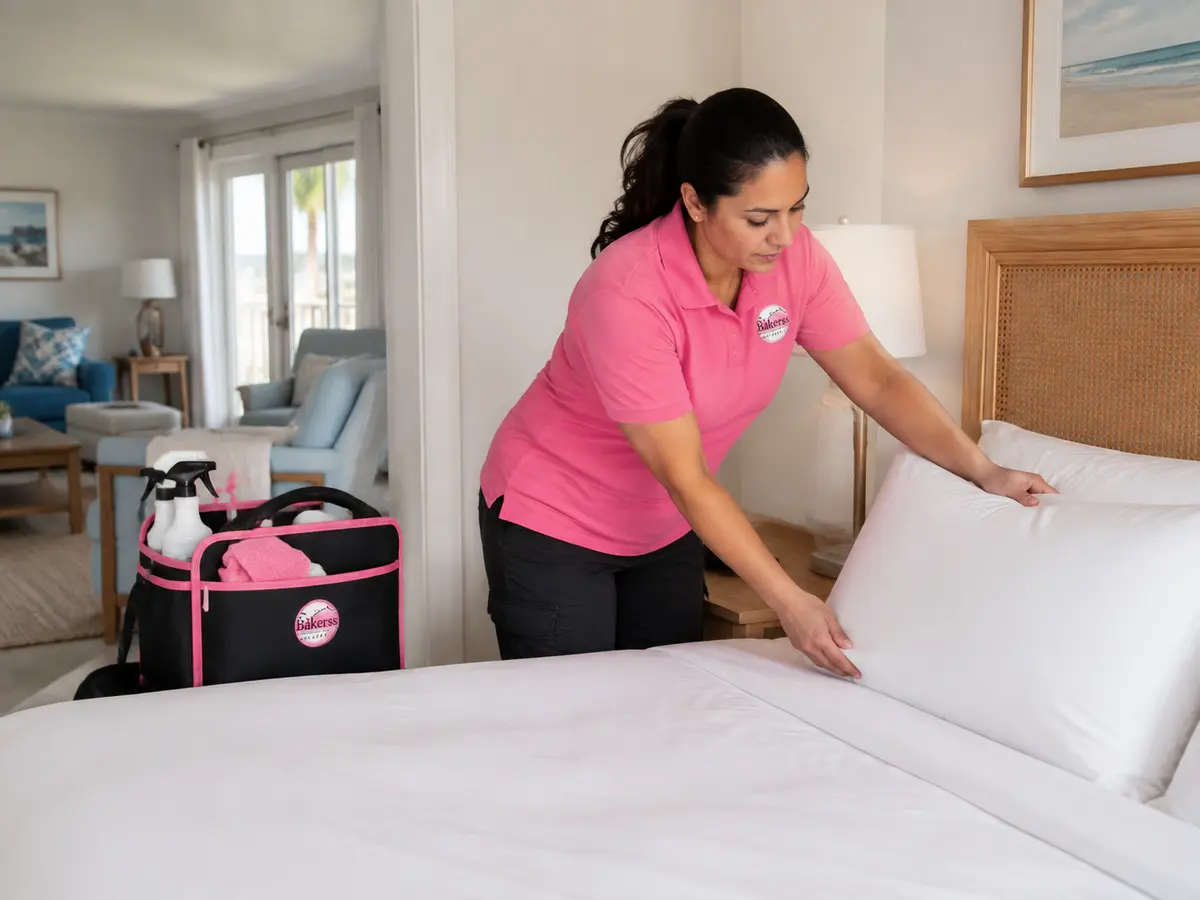
Your Airbnb cleanliness score is one of the most powerful levers in your STR revenue model — and it's one of the most neglected by operators who focus on pricing, amenities, and photography while treating cleaning as a commodity expense. In Myrtle Beach's competitive vacation rental market with 30,000+ active listings, the difference between a 4.7 and a 4.9 cleanliness score is visible in search ranking, conversion rate, and nightly rate compression. Understanding exactly how cleaning affects your review score and what the review score does to your revenue is the business case for treating cleaning as a strategic investment rather than a cost to minimize.
Airbnb's search algorithm is not public knowledge — Airbnb doesn't publish the exact weights. But the behavioral pattern is clear from the platform's public documentation and the observable outcomes that experienced STR operators discuss: overall score and category scores (cleanliness, accuracy, communication, location, check-in, value) influence search placement, and properties below approximately 4.8 overall receive meaningfully reduced visibility compared to properties above that threshold.
Cleanliness is the category guests weight most heavily in their own review decisions. It's the first impression — formed within 30 seconds of entering the property — and it sets the emotional tone for everything that follows. A guest who walks into a spotlessly clean property is primed to view minor inconveniences charitably. A guest who notices a dirty bathroom or sandy floors at check-in is primed to notice and document everything else that falls short.
Myrtle Beach vacation rental cleaning has one challenge that most STR markets don't face at the same intensity: sand. Guests arrive from the beach and bring fine silica sand into every surface of the property. Standard cleaning teams without a beach-specific protocol clean what they can see but miss the sand embedded in upholstery cushions, settled into drawer interiors, and accumulated at baseboard edges. The result is a property that photographs clean and smells clean but grinds underfoot — and guests notice. "Needs better cleaning" mentions in reviews almost always trace back to sand that wasn't removed rather than visible dirt or grime.
A beach-specific cleaning protocol addresses this: cushions removed and vacuumed on all sides, floors vacuumed before mopping (not after — wet mop on sand spreads it rather than removing it), drawer and cabinet interiors checked at each turnover, beach gear storage areas swept completely. These steps add 20–30 minutes to a standard turnover but eliminate the cleaning review issue that sand creates.
The revenue impact of review score degradation is real and quantifiable, though the specific numbers vary by market, listing type, and season. The general framework: listings above 4.8 overall receive better search placement than listings below 4.8. Better search placement means more views. More views at the same conversion rate means more bookings. In a market as competitive as Myrtle Beach, where thousands of listings compete for the same booking windows, the placement difference between 4.6 and 4.9 can mean the difference between 65% occupancy and 80% occupancy at comparable nightly rates.
Additionally, lower-scored listings frequently face pricing pressure — to maintain occupancy at a lower score, operators reduce nightly rates to overcome the conversion disadvantage. A property that might achieve $250/night at a 4.9 score may need to price at $215/night to achieve the same occupancy at a 4.7 score. Over 200 occupied nights annually, that $35 pricing gap is $7,000 in lost revenue — significantly more than the annual cost difference between adequate cleaning and professional-standard cleaning.
Beach sand protocol · Calendar sync · Same-day turnovers · Damage reporting · From $100/turnover · 843-467-7136
Get a Free Estimate →📞 843-467-7136In Myrtle Beach's competitive 30,000+ listing market, properties below 4.8 overall receive reduced search visibility that translates to lower occupancy or pricing pressure to maintain occupancy. A rough estimate: the nightly rate differential between a 4.9 and 4.7 cleanliness profile often exceeds the annual cost difference between standard and professional-level cleaning — making the investment in better cleaning strongly ROI-positive.
Beach-specific cleaning removes sand from cushions, upholstery, drawers, and floor edges that standard cleaning teams miss. Properties cleaned without this protocol have gritty floors and sandy furniture even when everything else is clean — generating the 'needs better cleaning' review mentions that suppress Airbnb cleanliness scores. Sand elimination is the most impactful single improvement most Myrtle Beach STR operators can make to their cleaning protocol.
Full deep cleaning (inside appliances, behind furniture, grout scrubbing, ceiling fans) twice annually — before peak season opens in spring and after peak season closes in fall. Standard turnover cleaning happens at every guest checkout. The deep clean catches the accumulation that turnover cleaning can't address in standard time windows.
Professional STR cleaning pays for itself in Myrtle Beach through better review scores, higher occupancy, and sustained nightly rates. DIY cleaning during back-to-back same-day turnovers in peak season is difficult to maintain at the quality standard that 4.9 cleanliness scores require. Most successful Myrtle Beach STR investors use professional turnover cleaning and reserve DIY for personal property visits.