⭐ 5-Star Rated · Licensed & Insured · 843-467-7136 — We Answer 24/7
Lawn Care

Best Grass Types for Myrtle Beach Lawns

4 min read Myrtle Beach & Horry County, SC By Bakerss Property Maintenance

Choosing the right grass type for your Myrtle Beach lawn is one of the most important decisions you can make for long-term turf health. Myrtle Beach's coastal South Carolina climate — hot summers, mild winters, high humidity, and sandy soil — favors specific warm-season grasses. Plant the wrong type and you'll be fighting your lawn every year. Plant the right one and maintenance becomes much easier.

The Big Four: Warm-Season Grasses for Myrtle Beach

1. Bermuda Grass — Best for Sun and High Traffic

Bermuda is the most popular turf grass on the Grand Strand for good reason. It thrives in Myrtle Beach's intense summer heat, establishes quickly, and bounces back rapidly from heavy use — making it ideal for homes with kids, dogs, vacation rentals with high traffic, and commercial properties.

2. Zoysia Grass — Best for a Dense, Carpet-Like Lawn

Zoysia is increasingly popular in Myrtle Beach for its lush, dense growth and better shade tolerance than Bermuda. It's also more drought-resistant once established, which is useful during Myrtle Beach's dry summer spells. Zoysia grows more slowly than Bermuda, which means slightly less mowing frequency — a practical benefit for busy homeowners.

3. St. Augustine Grass — Best for Shade Tolerance

If your Myrtle Beach property has significant tree coverage — common in communities like Carolina Forest and Forestbrook — St. Augustine is worth serious consideration. It's the best performer in partial to moderate shade among the warm-season options. It also tolerates coastal salt air well, which makes it a good choice for beachside properties.

4. Centipede Grass — Best for Low Maintenance

Centipede is sometimes called the "lazy man's grass" — and that's a compliment. It grows slowly, requires minimal fertilization (over-fertilizing is actually harmful), and thrives in Horry County's acidic sandy soils without much intervention. For homeowners who want a decent-looking lawn with minimal input, Centipede is a practical choice.

Quick recommendation: For most Myrtle Beach residential lawns with good sun exposure, Bermuda or Zoysia will give you the best-looking, most resilient lawn with proper care. For shaded properties or low-maintenance goals, consider St. Augustine or Centipede.

Myrtle Beach Soil & What It Means for Your Lawn

Most Horry County soil is sandy with low organic matter content and naturally acidic pH. This drains quickly — good for preventing waterlogging, but it means nutrients leach through the soil faster than in clay-heavy inland areas. A soil test from your local extension office can tell you exactly where your pH and nutrient levels stand, and our lawn care team can recommend the right amendment and fertilization approach for your specific grass type.

Mowing Height Matters More Than You Think

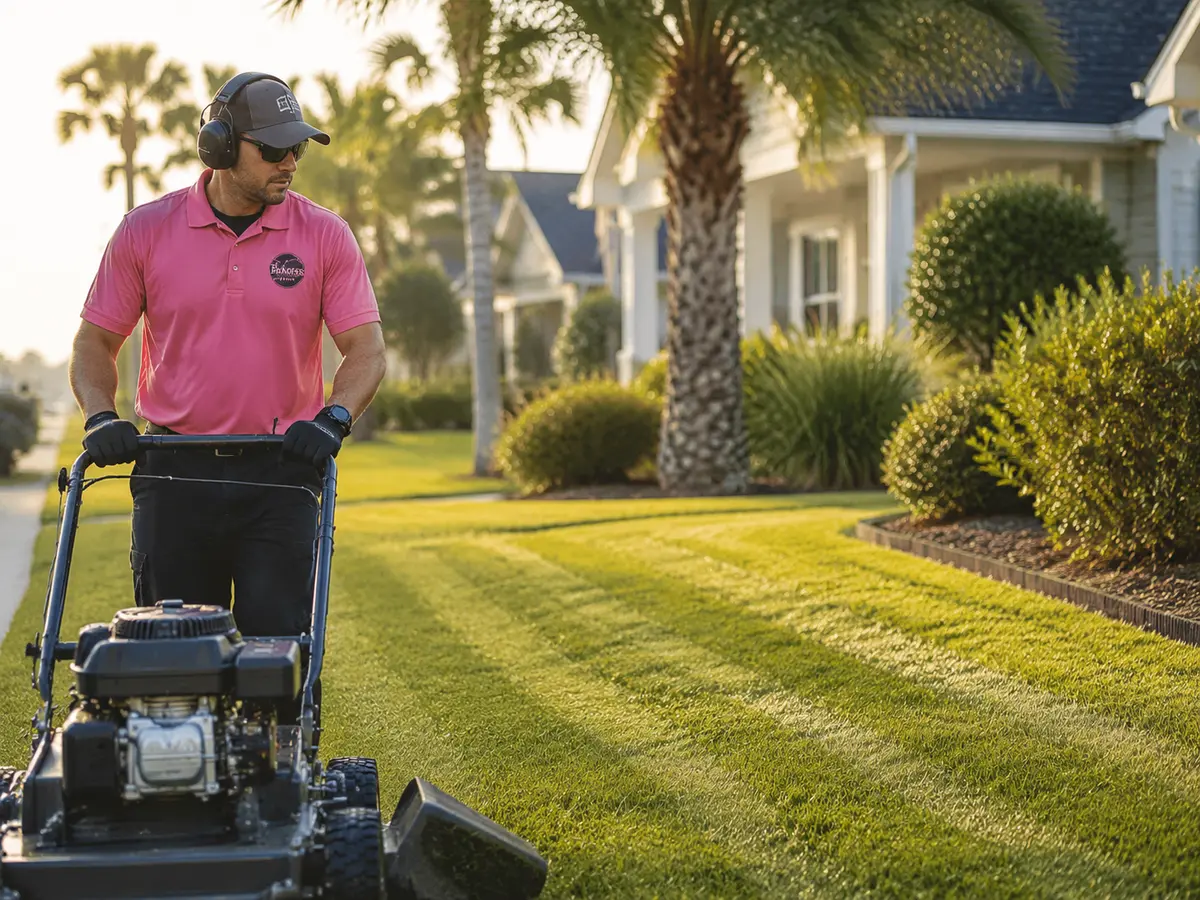
One of the most common lawn mistakes in Myrtle Beach is cutting grass too short — what lawn professionals call "scalping." Each grass type has an optimal mowing height range. Bermuda likes it short (under 1.5 inches). St. Augustine needs to stay tall (3–4 inches). Cutting any grass type below its optimal height stresses the plant, invites weeds, and creates conditions for fungal issues — all very common in Myrtle Beach's humid climate.

Professional Lawn Care in Myrtle Beach

Our crew knows the right cut height, schedule, and care for every Myrtle Beach grass type. Starting at $50 per visit.

Get a Free Estimate →