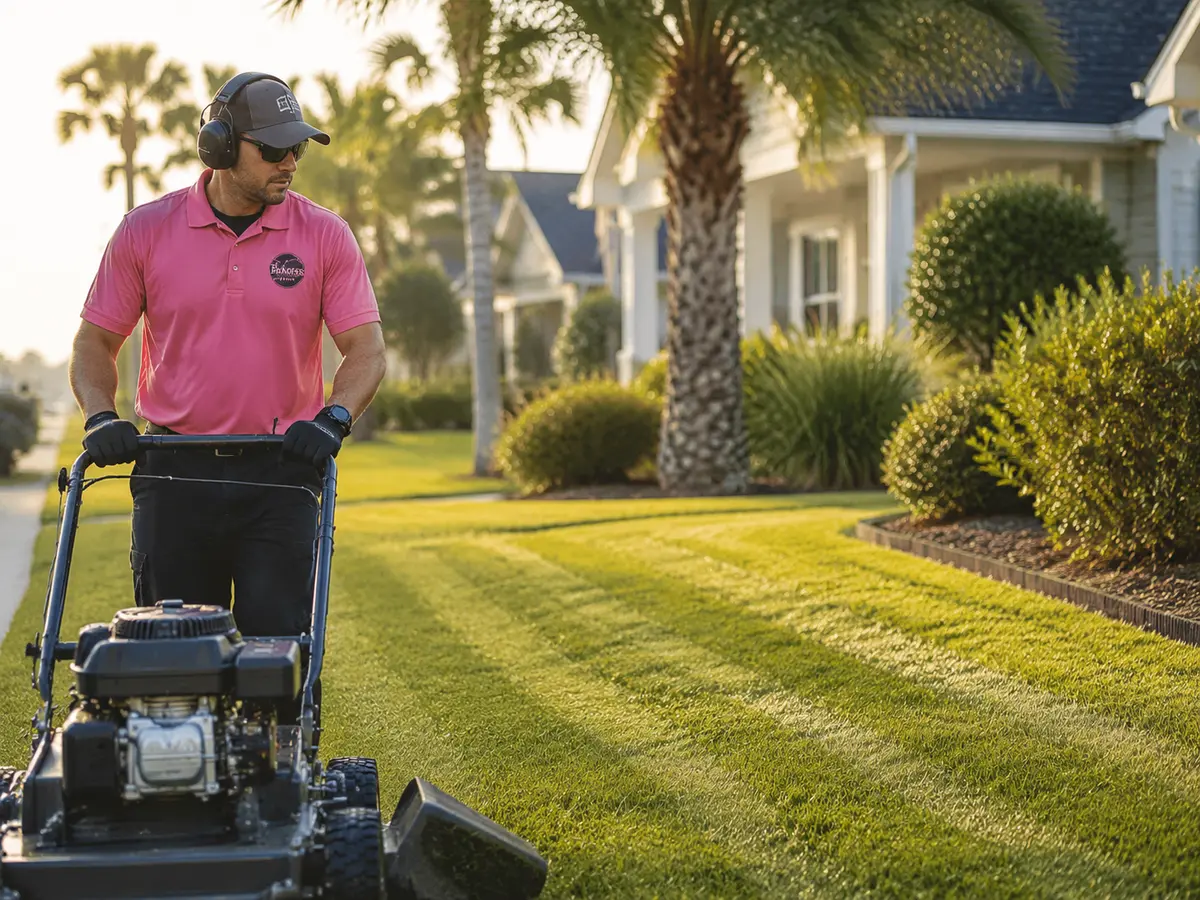
Lawn fertilization in Myrtle Beach requires more precision than most homeowners from other markets bring to it. The subtropical growing season, warm-season grass types, sandy coastal soils, and the risk of nutrient runoff into Horry County's waterways all create a fertilization environment where timing, product selection, and rate all matter more than simply following the bag instructions. Get it right and your lawn rewards you with dense, healthy turf through a nine-month growing season. Get it wrong — by fertilizing too early, too late, at too high a rate, or with the wrong product — and you waste money at best, damage the lawn at worst.
Every fertilization timing mistake in Myrtle Beach traces back to one misunderstood principle: warm-season grasses (Bermuda, Zoysia, St. Augustine, Centipede) cannot absorb or use nitrogen when they are dormant or transitioning in and out of dormancy. Nitrogen applied to a dormant or semi-dormant warm-season lawn does not get absorbed — it leaches through Horry County's sandy soil into groundwater and nearby waterways. This is why the window matters: only fertilize when the lawn is actively growing.
| Grass Type | 1st Application | 2nd Application | 3rd Application | 4th (optional) |
|---|---|---|---|---|
| Bermuda | Late March/early April — fully green | Late May/early June | Late July/August | September only if needed |
| Zoysia | April — Zoysia greens up later | June | August (optional) | None |
| St. Augustine | March — earliest green-up in coastal SC | May/early June | August | None |
| Centipede | May only | July only if deficient | None | None |
Slow-release fertilizers (polymer-coated urea, IBDU, methylene urea) release nitrogen gradually over 8–12 weeks rather than immediately. For Myrtle Beach lawns, slow-release products reduce the frequency of application needed, reduce leaching risk through the sandy coastal soil, and produce more consistent growth response without the flush-and-crash cycle that quick-release products create. For summer applications especially, slow-release is the professional standard.
A balanced fertilizer (NPK ratio like 16-4-8 or 15-5-10) provides nitrogen for growth, phosphorus for root development, and potassium for stress resistance. First-of-season and fall applications benefit from balanced products. Mid-summer applications can use nitrogen-forward products (32-0-10 or 28-0-5) to drive growth without excess phosphorus. Get a soil test every 2–3 years — Horry County's sandy soils sometimes have phosphorus levels high enough that additional phosphorus application is unnecessary.
Horry County's naturally sandy, slightly acid soils are prone to iron deficiency, particularly at soil pH above 6.5. Iron deficiency shows as yellowing between the veins of grass blades (interveinal chlorosis) while the veins stay green. Liquid iron applications — separate from fertilizer or in specialty iron-containing products — correct iron deficiency quickly and produce a deep green color response within 48–72 hours without the growth flush that nitrogen creates.
| Grass Type | Annual Nitrogen Lbs/1,000 sq ft | Per Application |
|---|---|---|
| Bermuda (high maintenance) | 4–6 lbs | 1–1.5 lbs per application |
| Bermuda (standard residential) | 2–4 lbs | 0.75–1 lb per application |
| Zoysia | 2–4 lbs | 0.75–1 lb per application |
| St. Augustine | 3–5 lbs | 1 lb per application |
| Centipede | 1–2 lbs total | 0.5–1 lb for the entire year |
Applying fertilizer within 48 hours of a predicted significant rainfall event in Myrtle Beach wastes the product and contributes to runoff into Horry County waterways. Check the forecast — apply when 48+ hours of no significant rain is expected, then water in lightly yourself if needed.