A green pool in Myrtle Beach happens fast. What was crystal clear on Monday can be visibly green by Wednesday in peak summer when conditions align — high water temperature, insufficient free chlorine, and a heavy bather load providing the nitrogen that algae feeds on. The good news: a properly executed shock and cleanup protocol recovers a green pool without draining it in most cases. The key is acting at the first sign of algae rather than waiting until the pool looks like a swamp.
Algae growth requires three things: water, nutrients (particularly nitrogen and phosphorus), and light. Myrtle Beach pools provide all three in abundance during peak summer:
Not all green pools are the same problem. The shade of green and clarity of water diagnoses the severity:
| Appearance | Severity | Recovery Time |
|---|---|---|
| Light green, still somewhat clear | Early algae bloom | 24–48 hours with proper treatment |
| Medium green, murky visibility | Active bloom | 2–4 days |
| Dark green, cannot see bottom | Severe bloom | 4–7 days |
| Black-green, pea soup | Extreme — full algae colony | 7–14 days; drain may be considered |
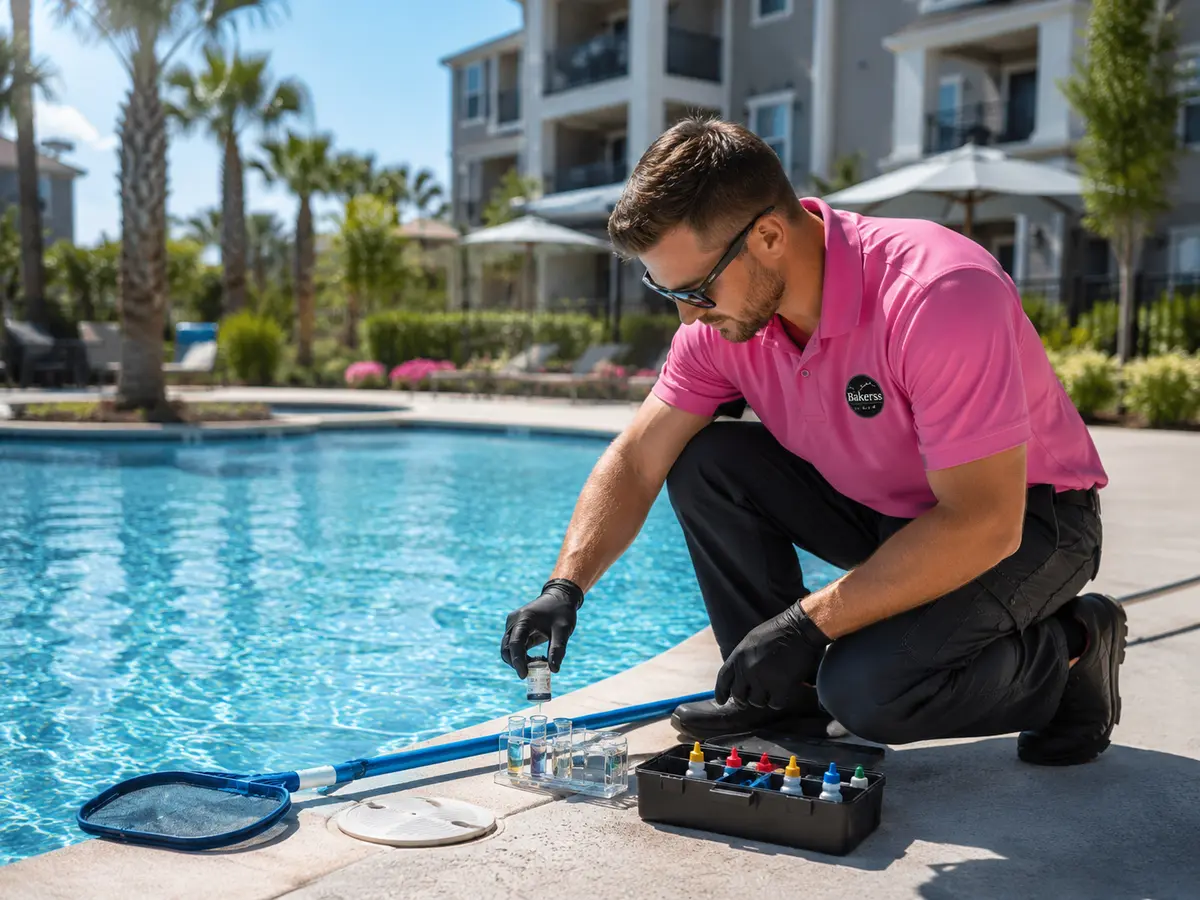
Test pH, free chlorine, CYA, and alkalinity before adding anything. You need to know your baseline to calculate the correct shock dose and identify any secondary issues.
Lower pH to 7.2 before shocking. Chlorine is more effective at lower pH — shocking at pH 7.8 wastes significant product. Add pH decreaser and wait 2 hours for it to circulate before proceeding.
For a light green pool: 1 lb cal-hypo (calcium hypochlorite, 68% available chlorine) per 10,000 gallons. For medium green: 2 lbs per 10,000 gallons. For severe bloom: 3–4 lbs per 10,000 gallons. Shock in the evening — daytime shocking burns off significant product before it can work.
Run your pool filter 24 hours per day throughout the recovery period. The filter physically removes dead algae from the water — without continuous filtration, dead algae stays suspended and keeps the water cloudy even after the algae is killed.
Brush walls, steps, floor, and all surfaces thoroughly after shocking. Algae clings to surfaces in biofilm — brushing breaks the biofilm and exposes the algae to the chlorine in the water. Do not skip this step.
After the initial shock, add a copper-based algaecide as a preventive measure. Algaecide does not replace chlorine — it's a supplemental treatment that targets the algae cells directly.
As the filter captures dead algae, filter pressure increases. Backwash or clean the filter cartridge every 24 hours during recovery — a clogged filter slows the process significantly.
Test chemistry again after 24 hours. If the pool hasn't cleared, re-shock at half the initial dose and continue filtration. Medium and severe blooms typically require 2–3 treatment cycles.
Most green pools in Myrtle Beach recover without draining. However, draining may be the better option when: the cyanuric acid (stabilizer) level is above 100 ppm (chlorine lock prevents effective sanitization and no amount of shocking will clear the pool), the total dissolved solids (TDS) have built up to the point where chemistry won't balance, or the pool has been in an extreme bloom state for more than 2 weeks. Partial drain and refill (draining 1/3 to 1/2 the pool and refilling) addresses high CYA without the risk of full drain/refill on an older pool structure.
Emergency service available · All chemicals included · STR priority scheduling · 843-467-7136
Get a Free Estimate →📞 843-467-7136Light green: 24–48 hours with proper shocking and continuous filtration. Medium green: 2–4 days. Severe dark green: 4–7 days. The single biggest factor in recovery time is continuous filtration — pools filtered only 8 hours per day take 2–3 times longer to clear than pools run 24/7 during the recovery process.
No. Green water indicates active algae bloom, which indicates insufficient sanitization. Insufficient sanitization means bacteria and other pathogens may not be controlled. Do not allow swimming until the water is clear, free chlorine is at least 2 ppm, and pH is in the 7.4–7.6 range.
Green pool recovery (shock treatment, chemicals, labor) runs $175–$400 depending on severity and pool size. For vacation rental STR properties, this can also represent lost revenue during the recovery period. This is why preventive weekly maintenance at $150–$250/month is a much better investment than reactive treatment — recovery costs more than prevention.
Weekly professional maintenance maintaining free chlorine at 2–4 ppm, pH at 7.4–7.6, and CYA at 30–50 ppm is the most reliable prevention. For STR pools with high bather loads, twice-weekly service during June through August eliminates the chemistry gaps that allow algae to establish.