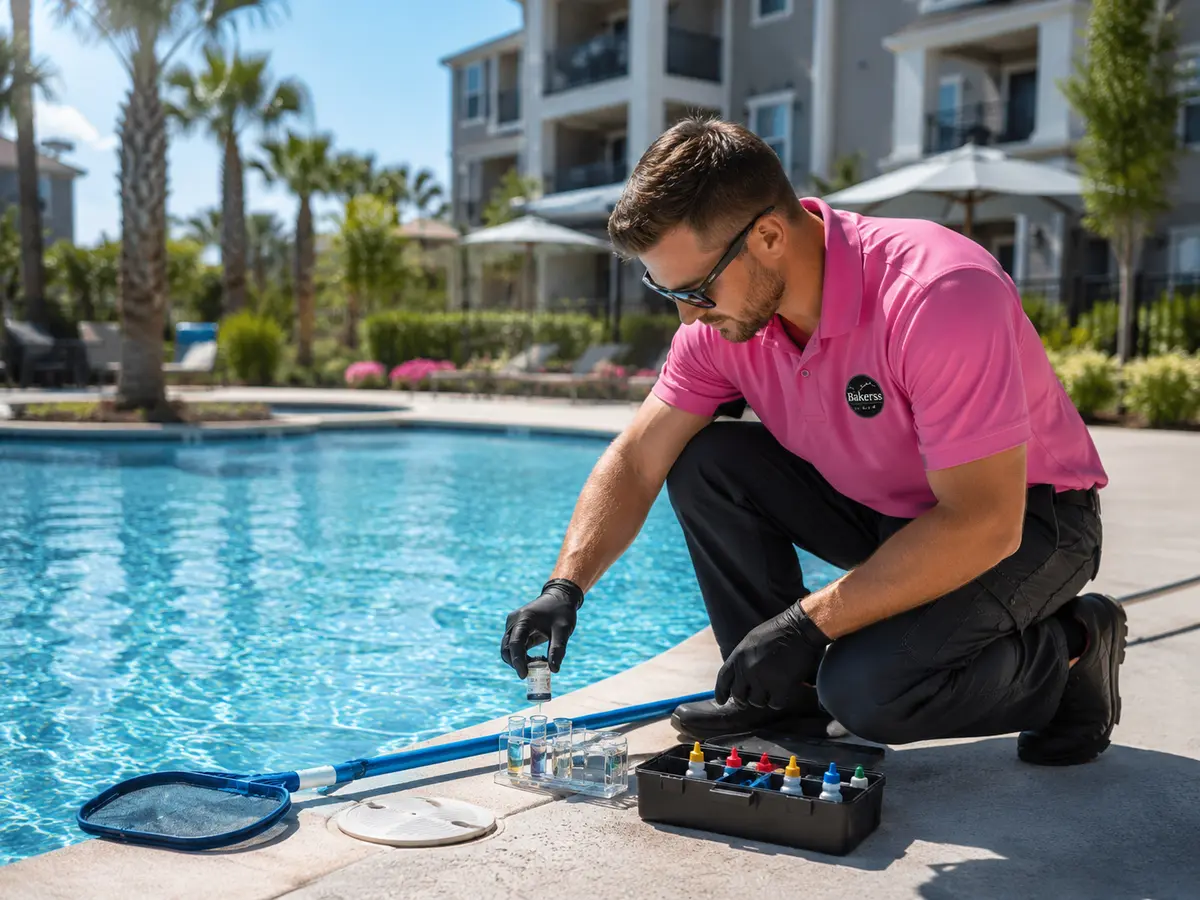
Saltwater pools are one of the most misunderstood topics in residential pool care. Many Myrtle Beach homeowners purchase or inherit saltwater pools believing they're getting a "chemical-free" or "maintenance-free" alternative to traditional chlorine pools. Neither is accurate — and misunderstanding how saltwater systems actually work leads to exactly the kind of chemistry neglect that produces green pools and equipment failures. This guide explains what a saltwater pool actually is, how it differs from a traditional chlorine pool in practice, and what owners of saltwater pools in coastal South Carolina specifically need to know.
A saltwater pool is not a chlorine-free pool. It is a pool with an automated chlorine generator — a salt chlorine generator (SCG) — that converts dissolved salt in the water to chlorine through a process called electrolysis. The pool still uses chlorine as its primary sanitizer; it just generates that chlorine on-site from salt rather than requiring manual addition of chlorine products.
Salt levels in a residential saltwater pool run 2,700–3,400 ppm — roughly one-tenth the salinity of ocean water. This is enough salt to power the electrolysis process but not enough to taste strongly salty or cause any discomfort to swimmers. Many people describe the water as feeling softer and gentler on skin and eyes than traditionally chlorinated pools — a real and common experience, but one that comes from better pH stability and lower combined chlorine, not from the absence of chlorine.
All the chemistry parameters still apply: pH, total alkalinity, cyanuric acid (CYA), calcium hardness, and free chlorine all need to be maintained in the same target ranges as a traditional pool. Weekly testing is still required. Shocking is still needed periodically. Brushing, skimming, and filtration are identical. The pool still turns green if free chlorine drops and conditions align.
Salt cell maintenance: The salt chlorine generator cell is an electrolyzing plate system that needs inspection and cleaning every 3 months and replacement typically every 3–5 years. Scale (calcium carbonate deposits) builds up on the cell plates and reduces chlorine generation efficiency. In Myrtle Beach's coastal environment, the cell needs more frequent inspection than in softer-water markets.
Salt level testing: Salt concentration (target: 2,700–3,400 ppm) must be monitored and maintained. Heavy rainfall dilutes salt levels and may require salt addition. Backwashing and splashout remove water (and salt) from the pool over time.
pH drift: Saltwater pools tend to drift alkaline (pH rising) more aggressively than traditional pools because the electrolysis process raises pH as a byproduct of chlorine generation. More frequent pH reduction additions are typically required for saltwater pools than traditional chlorine pools.
STR considerations: Saltwater pool SCG systems are calibrated to produce a baseline chlorine output. High bather loads during vacation rental peak season may exceed what the system can produce on its default settings. During heavy-use periods, supplemental chlorine additions may be needed to maintain free chlorine above the minimum threshold. This is one of the key adjustments that many STR owners with saltwater pools don't make — and it's why vacation rental saltwater pools can turn green during peak season even though the SCG appears to be running normally.
| Service | Price Range |
|---|---|
| Weekly maintenance — saltwater residential | $175–$250/month |
| Weekly maintenance — saltwater STR (high bather load) | $225–$350/month |
| Salt cell inspection and cleaning | $75–$125 |
| Salt cell replacement (labor, cell not included) | $125–$225 |
| Salt addition (per 40 lb bag) | $18–$28 + labor |
Weekly service · All chemicals · Cell inspection included · STR-ready · From $175/month · 843-467-7136
Get a Free Estimate →📞 843-467-7136No — saltwater pools use chlorine as their primary sanitizer. The saltwater chlorine generator (SCG) converts dissolved salt to chlorine through electrolysis. The same chemistry parameters (free chlorine, pH, alkalinity, CYA) all apply and must be maintained. The difference is automation — the SCG generates chlorine continuously rather than requiring manual addition.
The SCG was not producing enough free chlorine to keep up with the pool's demand. Common causes: salt level below operating range (SCG can't generate effectively), cell scale buildup reducing output, high bather load from STR guests exceeding baseline production, or pH above 7.8 making available chlorine less effective. Test chemistry and check salt level and cell condition.
Weekly professional maintenance is the standard for saltwater pools in Myrtle Beach during active season. Chemistry testing and adjustment, brushing, skimming, filter service, and equipment checks — identical to traditional pool service. Additionally, salt cell inspection and cleaning every 90 days and salt level testing/adjustment at each visit.
Salt air effects on pool equipment are similar to their effects on other coastal metal and electrical systems — accelerated corrosion on exposed metal components and control boards. Premium marine-rated equipment is specified for oceanfront pool installations. Standard equipment in near-ocean locations benefits from more frequent inspection of exposed electrical components and metal fittings.